Crepey eyelids—that thin, papery, slightly wrinkled texture across the upper and lower lid—are one of the more frustrating skincare concerns. The standard advice ("apply retinol! exfoliate! use stronger actives!") frequently makes them worse, because the eyelid is the thinnest skin on the human body and tolerates aggressive intervention poorly.
This guide explains why eyelid skin is biologically different, what topical care can realistically do, what to avoid, and the evidence-based routine that visibly improves crepey eyelids over 8-12 weeks. We'll be honest about where in-office options become relevant and how to know when you've reached the topical ceiling.
Why Eyelid Skin Is Different
The skin on your eyelids is roughly 0.5 mm thick. The skin on your cheek is around 1.5-2 mm. That four-fold difference in thickness creates four distinct biological realities:
1. Less Structural Reserve
Less collagen, less elastin, less dermal density. There's simply less structural material to work with—and it's the first to show wear from aging, sun exposure, and oxidative stress.
2. Higher Permeability
Active ingredients absorb faster and at higher relative concentrations. A retinoid concentration that's gentle on cheek skin can be irritating on the eyelid. A fragrance that doesn't bother facial skin can trigger contact dermatitis here.
3. Constant Movement
You blink roughly 15,000-30,000 times per day. Each blink is a small mechanical stress on already-thin skin. Combined with eye-area expressions (smiling, squinting), the area accumulates dynamic wrinkles fastest of any facial zone.
4. Almost No Sebum
Eyelid skin has very few sebaceous glands. It can't self-hydrate. Without active topical hydration, it dries fast.
The combination is why most people see eyelid changes in their early-to-mid 30s—well before other facial signs of aging—and why aggressive routines often backfire here even when they work elsewhere.
What Crepey Eyelids Actually Are
The "crepey" texture comes from three overlapping factors:
1. Surface dehydration that exaggerates fine lines 2. Loss of dermal density from collagen and elastin breakdown 3. Cumulative photo-damage especially in people who don't wear sunglasses or SPF reliably
The first is the easiest to address and produces the fastest visible improvement. The second is slower but real. The third is the foundation problem—prevention going forward matters more than reversal of past damage.
The Gentle, Evidence-Based Routine
The eyelid area benefits more from consistency and gentleness than from intensity. A reliable routine:
Morning
1. Splash water cleanse around the eyes (no rubbing) 2. Tap a small amount of AE Plumping Serum gently around the orbital bone (under-brow, under-eye, careful around lash line) 3. Light moisturizer or eye cream 4. Mineral SPF 30+ safe for the eye area (look for "ophthalmologist-tested") 5. Sunglasses with UV protection — these matter more than people realize
Evening
1. Gentle eye makeup remover (oil-based or micellar) 2. Cleanse the eye area without scrubbing 3. AE Plumping Serum tapped around the orbital bone 4. Eye cream or moisturizer 5. Optional: very gentle retinoid eye cream 1-2 nights per week, only if your eyelids tolerate it (start at the lowest concentration available)
What "Tap, Don't Rub" Means
Use your ring finger (the weakest finger, which prevents pulling) to gently press product onto the area. Never drag, smear, or massage the eyelid. The mechanical force of standard application accelerates wrinkle formation.
Hydration that's safe for eyelid skin
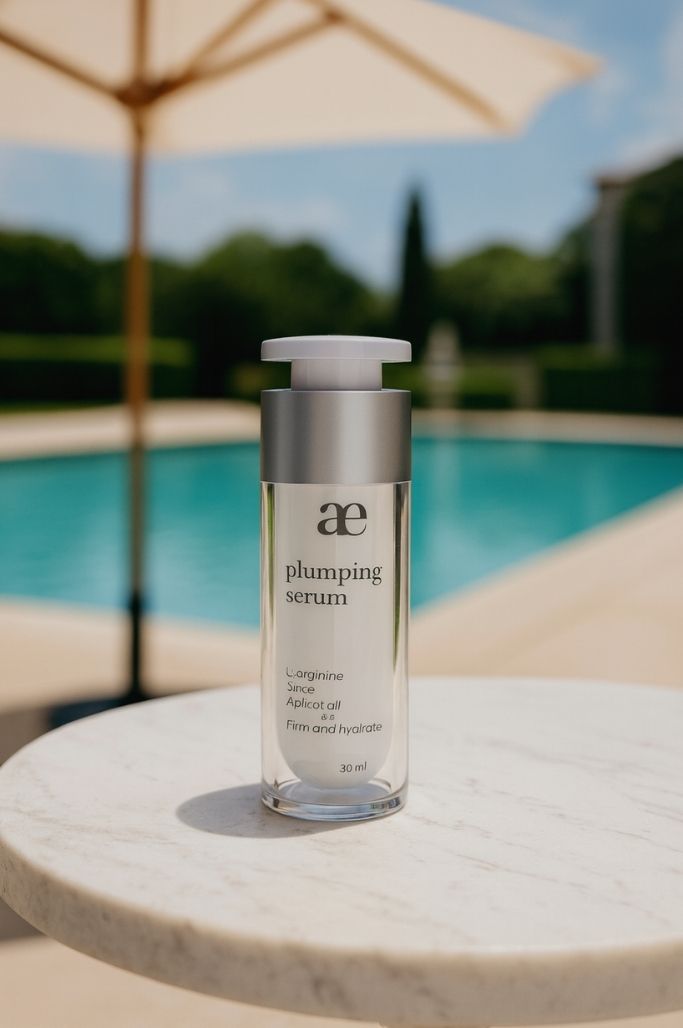
AE Plumping Serum is fragrance-free and gentle enough for the orbital area—multi-weight HA + peptides + ceramide NG without the irritants standard products often include.
Shop plumping serumWhat to Use vs Avoid Around the Eyelids
| Use | Avoid |
|---|---|
| :--- | :--- |
| Multi-weight hyaluronic acid | High-percentage glycolic or salicylic acid |
| Gentle peptides (palmitoyl tripeptides) | Fragrance, parfum, essential oils |
| Ceramide NG for barrier | Drying alcohols (SD alcohol, denatured) |
| Niacinamide (gentle, well-tolerated) | High-percentage vitamin C (10%+ L-ascorbic acid) |
| Mineral SPF safe for eyes | Daily strong retinoid |
| Tap-don't-rub application | Aggressive massage or rubbing |
| Sunglasses outdoors | Skipping SPF in this area |
The Underestimated Role of Sunglasses
Daily sunglasses with broad-spectrum UV protection do more for long-term eye-area aging than most serums on the market. UV is the single biggest accelerator of crepey eyelid development—and the eye area gets more UV exposure than people realize because:
Wraparound sunglasses or large frames that physically block UV from reaching the skin are the simplest, most effective intervention for prevention.
Realistic Expectations
A patient, well-executed routine can:
It cannot:
People who get the best results are usually the ones who started gentle care in their 30s. People starting in their 50s or 60s see real improvement but should also discuss in-office options if eyelid appearance is a major concern.
When to Consider In-Office Help
Topical skincare hits a ceiling for crepey eyelids that combine significant photo-damage and substantial laxity. If you've been consistent for 12+ weeks and eye-area appearance is still bothering you, the realistic conversation with a board-certified dermatologist or oculoplastic surgeon includes:
These are layers beyond skincare. Topical care continues to matter alongside or after any in-office intervention.
Common Questions
Can I use my regular face serum around the eyes?
It depends on the formula. Fragrance-free, peptide- and HA-based serums like AE Plumping Serum are generally safe for the orbital bone area (not the lid itself). Strong actives, fragranced formulas, or vitamin C-heavy serums often irritate.
Will retinol fix crepey eyelids?
Sometimes—at low concentrations applied carefully 1-2 nights per week. Aggressive retinol use on eyelid skin frequently causes irritation, increased crepiness, and rebound dryness. Start very low.
What about prescription eye creams?
Some dermatologists prescribe low-concentration tretinoin formulations specifically for the eye area. This requires medical supervision and is not the same as over-the-counter retinol.
Do eye exercises help?
Mixed evidence at best. They probably don't hurt and may modestly tone surrounding muscles, but they don't address the dermal changes that cause crepiness.
How important is sleep for eye-area appearance?
Very. Chronic sleep deprivation increases puffiness, dehydration lines, and visible crepiness. Eye-area appearance is one of the first places fatigue shows up and one of the last to recover.
The Verdict
Crepey eyelids respond to gentle, consistent, hydration-focused care—not aggressive intervention. The biology of eyelid skin demands a different approach than the rest of the face: less is more, taps not rubs, and absolutely no compromise on daily SPF and sunglasses.
AE Plumping Serum fits the eye area well because it's fragrance-free, peptide- and HA-based, and gentle enough for the orbital bone region. Combined with eye cream, mineral SPF, and consistent sun protection behavior, it's the foundation that produces visible improvement over 8-12 weeks.
Start the gentle approach with AE Plumping Serum—and protect your eyelids the way they actually need.