Fine lines around the mouth—often called vertical lip lines or "smoker's lines" even when you've never smoked—are one of the most-asked-about concerns in skincare. They appear earlier than people expect, deepen faster than other facial wrinkles, and resist a lot of the standard advice that works elsewhere on the face.
This guide explains why perioral skin is biologically more vulnerable, what topical skincare can realistically do, what it can't, and the evidence-based routine that softens vertical lip lines over 8-12 weeks. We'll be honest about the limits and where in-office treatments enter the picture.
Why Perioral Skin Lines First
The skin around your mouth is structurally different from the rest of your face in three meaningful ways:
1. It's Thinner
Perioral skin (the area immediately around the lips) has fewer dermal layers and less collagen density than cheek or forehead skin. Less structural support means it deforms more easily under repeated movement.
2. It Has Almost No Sebaceous Glands
Most facial skin produces oil that helps maintain hydration and barrier function. Perioral skin produces very little. This makes it more prone to dehydration, which makes lines look deeper than they actually are.
3. It's Constantly Moving
You speak, eat, drink, smile, frown, sip from straws, and purse your lips thousands of times per day. Every contraction creates and reinforces dynamic wrinkles. Combined with thinner skin and less hydration, the math goes against the perioral area.
Add cumulative sun exposure (the lower face often gets less SPF than the cheeks) and the result is predictable: fine vertical lines start appearing in the late 30s for many people, and earlier for those who smoke, sun-bake, or dehydrate frequently.
Two Categories of Lip Lines
Treatment depends on which type you have:
Dehydration Lines
Shallow, surface-level lines that appear and worsen when skin is dehydrated. They look deeper after a salty meal, a poor night's sleep, or a flight. These respond beautifully to topical hydration—often visibly improving within 1-2 weeks of consistent skincare.
Anatomical Wrinkles
Deeper, etched lines from years of repeated muscle contraction plus structural skin changes. These soften but don't disappear with topical work. In-office treatments (botulinum toxin, fillers, microneedling, laser) address the deeper structural component.
Most people have a mix. The good news: even when anatomical wrinkles are present, treating the dehydration component reduces visible severity meaningfully. You might "look five years younger" by hydrating well even though the underlying anatomy hasn't changed.
What Topical Skincare Can Realistically Do
For fine lines around the mouth, evidence-based topical care can:
1. Restore surface hydration so dehydration-driven depth softens within 1-2 weeks 2. Support collagen-adjacent pathways so structural skin density improves over 8-12 weeks 3. Reinforce the barrier so the perioral area becomes more resilient to environmental stress 4. Improve makeup wear so foundation and lipstick don't settle into and emphasize lines
What it can't do: erase deep, anatomical wrinkles or stop the muscle contractions that create them.
The Evidence-Based Routine
A perioral-focused routine doesn't require special "lip line" products. It uses the same fundamentals as the rest of your face, applied with attention to the lower-face area.
Morning
1. Gentle cleanse (don't strip the perioral skin) 2. AE Plumping Serum on slightly damp skin, applying generously around the mouth and lower face 3. Moisturizer including the perioral area (most people skip below the cheekbones) 4. SPF 30+ including all the way down to your jawline and around the lips 5. Reapply SPF if outdoors
Evening
1. Thorough but gentle cleanse 2. AE Plumping Serum on damp skin 3. Optional: gentle retinoid 2-3 nights per week, applied carefully around the mouth (start sparingly—this area irritates easily) 4. Richer moisturizer, including a lip balm with occlusive ingredients
The key changes vs. a generic facial routine: extending coverage to the perioral area (most people stop at the cheek), prioritizing damp-skin application of HA, and being careful with retinoid concentration in this thinner zone.
A serum that takes the perioral area seriously
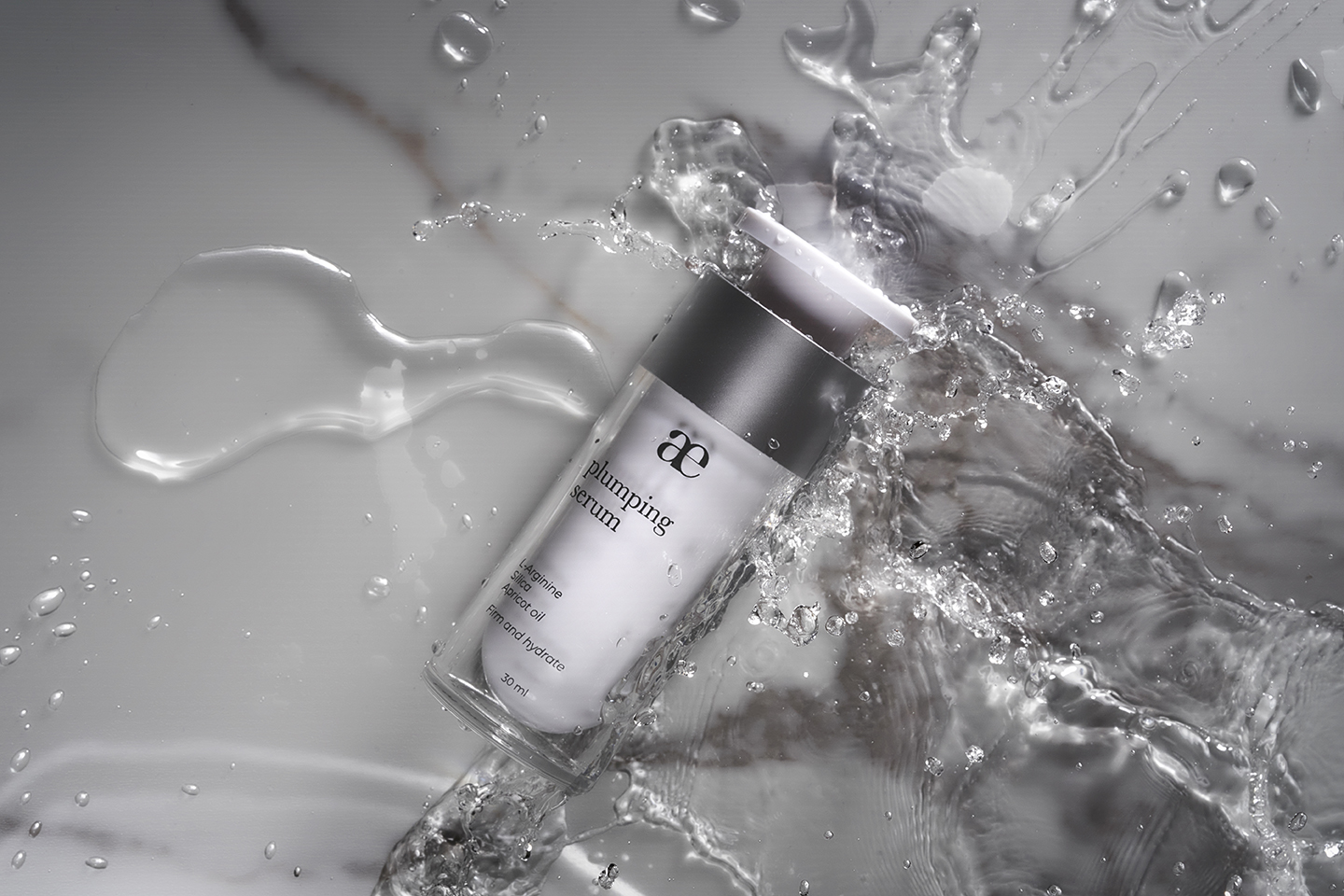
AE Plumping Serum's multi-weight HA + palmitoyl tripeptides + ceramide NG works as well around the mouth as on the cheeks—the integrated formula for visible lip line softening.
Shop plumping serumWhat to Use vs What to Avoid Around the Mouth
| Use | Avoid |
|---|---|
| :--- | :--- |
| Multi-weight HA (multi-MW hyaluronic acid) | Pure high-MW HA alone |
| Palmitoyl tripeptides | Peptides without supporting hydration |
| Ceramide-rich moisturizer | Drying alcohols |
| Gentle retinoid 2-3 nights/week | Daily retinoid above this skin's tolerance |
| Daily SPF 30+ to lip border | Skipping SPF below cheekbones |
| Lip balm with occlusives at night | Petroleum-only balms with no actives |
| Drinking adequate water | Habitual straw drinking (reinforces lines) |
The Layering Tip Most People Miss
Apply AE Plumping Serum after the rest of your face—but apply it to the perioral area while the skin there is still slightly damp. Most people apply serum once across the whole face, by which point the lower-face area has dried out. A small extra dab on damp perioral skin produces better hydration uptake.
For nighttime, consider sandwiching: thin layer of moisturizer, retinoid, then AE Plumping Serum on top. This buffers the perioral area against retinoid irritation while still allowing both actives to work.
When to Consider In-Office Support
Topical skincare hits a ceiling for deep, anatomical lip lines. If you've been consistent with a barrier-friendly routine for 12+ weeks and visible lines are still bothering you, the realistic next step is consultation with a board-certified dermatologist about:
These are layers beyond skincare, not replacements for it. People who do in-office treatments and skip daily skincare see worse, shorter-lived results.
Common Questions
How long until I see lip line improvement from a serum?
Dehydration-driven softening within 1-2 weeks. Structural support from peptides over 8-12 weeks. Be patient with the slower benefits.
Will retinol around my mouth cause irritation?
It can. Start with low concentration (0.1-0.25%), apply only 2-3 nights per week, and use the sandwich method (moisturizer first, then retinoid, then serum). Build slowly.
Why do lip lines look worse when I wear lipstick?
Lipstick (especially matte formulations) settles into existing lines and accentuates them. Hydrating lip products and lip-prep routines reduce this. The lines are still there—they're just more visible with pigment.
Can drinking from a straw really cause lip lines?
Repeatedly pursing the lips for years contributes to dynamic wrinkle formation. It's not the only cause, but it's a real factor for heavy straw users. Same applies to whistling and certain musical instruments.
Do lip masks work?
Hydrating overnight lip masks help with surface hydration and lip plumpness. They don't significantly address the perioral skin lines beyond the lip border itself.
Conclusion
Fine lines around the mouth are a real concern that responds well to disciplined topical care for the dehydration component, more slowly for the structural component, and not at all for deep anatomical wrinkles without procedural help. Knowing which type you have determines what you can realistically achieve with skincare alone.
AE Plumping Serum addresses the topical levers—hydration, peptide signaling, barrier support, antioxidants—in one daily step. Add SPF, extend your routine to include the perioral area, and commit for 12 weeks. Most people see meaningful softening within that timeframe.
Start with AE Plumping Serum and treat the lower face with the same attention you give the rest.