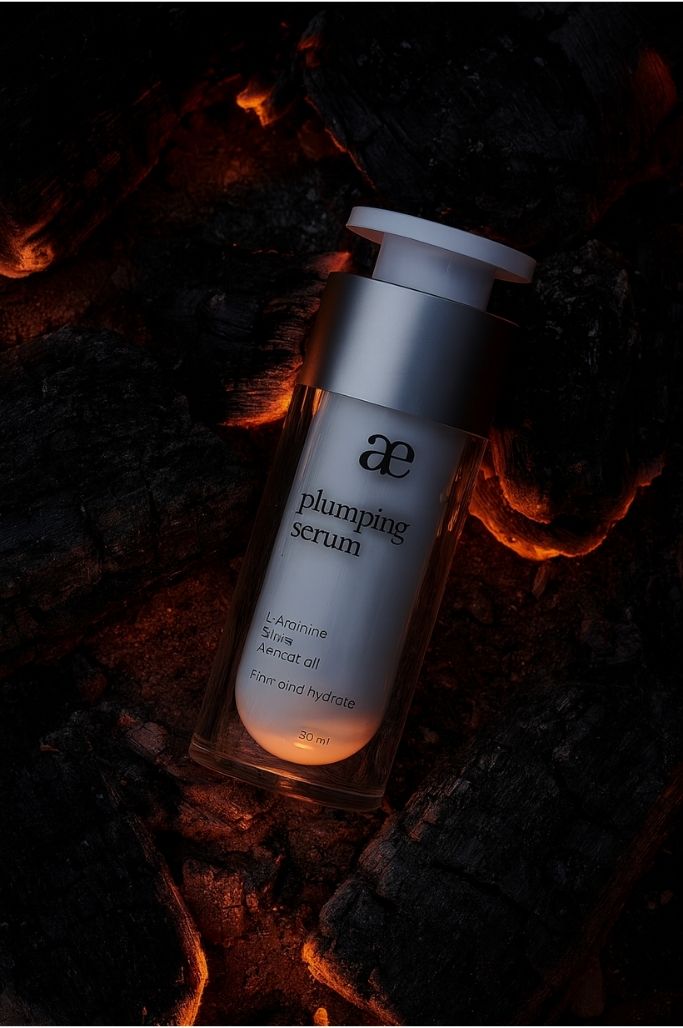
When it comes to a youthful, hydrated complexion, two ingredients dominate: hyaluronic acid and peptides. If you've spent any time researching fine lines, you've seen both touted as must-haves.
Are they redundant? Do you need both? In 2026, the science makes this easy: they solve different problems on different timelines. This guide breaks down exactly what each one does and explains why AE Plumping Serum combines them into a single high-performance formula.
Hyaluronic Acid: The Moisture Magnet
Hyaluronic acid (HA) is a glycosaminoglycan that occurs naturally in your skin. Its claim to fame is its capacity to bind many times its weight in water. Think of it as a sponge that sits within the upper epidermis, keeping the surface plump and dewy.
As we age, our natural levels of hyaluronic acid deplete. The result: a slightly deflated look where skin appears duller and fine lines more visible. Topical HA refills the sponge.
The Immediate Effect of HA
HA provides the closest thing skincare has to instant gratification. Within minutes of application on damp skin, hydration improves and the surface looks more reflective. This is the foundation of the "glass skin" look that has dominated trends for years.
What HA Doesn't Do
Hyaluronic acid does not build collagen. It does not address structural laxity. It does not protect against oxidative damage. It hydrates—powerfully, but only that.
Peptides: The Messengers of Repair
While HA handles hydration, peptides handle communication. Peptides are short amino acid chains that act as biological signals to your skin's fibroblasts.
Unlike HA, peptides don't provide moisture. They tell your cells to ramp up production of structural proteins like collagen and elastin. By applying high-quality signaling peptides consistently, you're delivering the messages your skin uses to maintain its own structural foundation.
The Long-Term Benefit of Peptides
Peptides are not an instant fix. They're a marathon. Consistent twice-daily use over 8-12 weeks supports skin thickness and resilience. The structural support compounds.
Read more in our how peptides boost collagen deep-dive.
What Peptides Don't Do
Peptides don't hydrate immediately. Used alone, they often leave skin feeling flat or tight. They need a hydrating, barrier-friendly base to perform their best.
Why You Need Both for Real Results
Imagine maintaining a luxury building. Hyaluronic acid is the water system that keeps everything running smoothly and prevents materials from drying out. Peptides are the maintenance crew that reinforces the structural beams.
If you only use HA, your skin stays hydrated but lacks long-term firmness support. If you only use peptides, your skin slowly improves structurally but lacks the immediate radiance and smoothness hydration provides. Together, they cover both timelines.
Both, in one step
AE Plumping Serum combines multi-weight HA, palmitoyl tripeptides, ceramide NG, and niacinamide—the full hydration-plus-signaling story without layering three serums.
Shop plumping serumComparison Table
| Feature | Hyaluronic Acid | Peptides |
|---|---|---|
| :--- | :--- | :--- |
| Primary function | Hydration | Collagen signaling |
| Timeline | Days | Weeks to months |
| Best for | Dryness, dullness, surface plumping | Firmness, fine lines, structure |
| Mechanism | Binds water in stratum corneum | Signals fibroblasts |
| Skin type | All | All, especially mature |
| Cost stand-alone | Low ($10-20) | Medium ($25-60) |
| Used alone | Hydrates well, no structural impact | Slow improvements, may feel flat |
| Used together | Synergy: hydrated skin signals better | Synergy: signaling lasts longer |
The AE Plumping Serum Approach
Many brands sell HA and peptides as separate serums, forcing you to layer multiple bottles—which often leads to pilling, irritation, or simply skipping a step on busy mornings.
We formulated AE Plumping Serum to deliver both in a single layer, plus ceramide NG for barrier support and niacinamide for tone. This integration matters: skin that's properly hydrated and barrier-supported responds better to peptide signaling. The actives reinforce each other instead of competing for absorption time.
How to Layer If Using Separate Products
If you do use separate products, the rule is "thinnest to thickest" on damp skin:
1. Hydrating toner or essence (optional) 2. HA serum applied to slightly damp skin 3. Peptide serum (wait one minute) 4. Moisturizer to seal 5. SPF (mornings only)
The single-step alternative is using AE Plumping Serum, which collapses steps 2 and 3.
Common Questions
If I can only buy one, which should I choose?
For under-30 skin focused mainly on hydration: HA. For 30+ skin focused on long-term structural support: peptides—or a combined formula like AE Plumping Serum.
Can I layer HA serum on top of AE Plumping Serum?
You can, but it's usually unnecessary. AE already delivers multi-weight HA. Adding more humectant on top can cause pilling.
Do peptides help with deep wrinkles?
Modest impact at best. Deep, anatomical wrinkles are largely a volume and structural issue that topical skincare can soften but not erase. Peptides help most with shallow fine lines and overall firmness.
Are there any peptide-HA combinations to avoid?
No major chemistry conflicts. The main concern is using too many products at once and triggering pilling—simpler is usually better.
Conclusion
In the debate of HA vs peptides, the honest answer is "both"—on different timelines, for different reasons. Hydration without structure is fleeting; structure without hydration is dull.
Get both in one step with AE Plumping Serum and skip the layering math.