Walk into any wellness store in 2026 and you'll see collagen supplements everywhere—powders, capsules, drinks, gummies. The marketing is dramatic: drink your collagen, and your skin will thicken, your wrinkles will fade, your hair will grow. Some of those claims have meaningful evidence behind them. Many don't.
Meanwhile, the topical peptide serum sitting in your bathroom delivers signaling molecules directly to your skin's fibroblasts. Different mechanism, different timeline, different evidence quality. This guide compares them honestly: what each actually does, what the evidence really says, and where each fits in a serious anti-aging routine. We'll also explain why AE Plumping Serum and a collagen supplement aren't competitors—they're complementary if you choose to use both.
How Each One Works
Topical Peptides
Peptides are short amino acid chains applied directly to skin. When formulated in the right vehicle, they penetrate the upper epidermis and act as signaling molecules—telling fibroblasts to ramp up collagen and elastin production. The mechanism is direct: peptide → cell receptor → gene expression → new collagen.
Read how peptides boost collagen for the full mechanism breakdown.
Oral Collagen Supplements
Collagen supplements are typically hydrolyzed collagen (collagen broken into smaller peptides) sourced from bovine, marine, or plant fermentation. When you swallow a collagen supplement:
1. It enters your digestive system 2. Gets broken down further by stomach acid 3. Most of it is absorbed as individual amino acids—same as eating any protein 4. The amino acids enter the general amino acid pool used for all protein synthesis 5. Some portion may end up routed to skin collagen synthesis
The key biological reality: your body doesn't preferentially route swallowed collagen back into skin collagen. It goes wherever protein synthesis is happening. Some research suggests certain collagen peptide fragments may signal to skin specifically, but the mechanism is far less direct than topical application.
The Evidence: What the Research Actually Says
Topical Peptides
Multiple controlled studies show topical signaling peptides (palmitoyl tripeptide-1, palmitoyl tetrapeptide-7, Matrixyl 3000) produce measurable improvements in:
The effects are modest but real and reproducible across studies. The strongest evidence is for the palmitoyl tripeptides found in serums like AE Plumping Serum.
Oral Collagen Supplements
Studies on oral collagen are mixed, with two distinct conclusions emerging:
What the evidence supports: - Modest improvements in skin elasticity over 8-12 weeks of consistent supplementation - Small reduction in wrinkle depth in some studies - Possible improvement in skin hydration markers - These effects are real but generally smaller than topical interventions
What the evidence doesn't support: - Dramatic transformation - Better results than other complete proteins - Specific routing to skin (most amino acids end up where the body decides) - "Beauty from within" as a replacement for topical care
The honest summary: oral collagen supplements probably do something modest. They're not a scam, but they're also not a substitute for direct topical care.
The Direct Comparison
| Factor | Topical peptides | Oral collagen |
|---|---|---|
| :--- | :--- | :--- |
| Mechanism | Direct signaling at skin cells | Indirect (digested, then routed) |
| Evidence quality | Moderate-strong, controlled studies | Mixed, smaller effect sizes |
| Effect on visible wrinkles | Modest measurable improvement | Modest measurable improvement |
| Effect on skin density | Yes, over 8-12 weeks | Possibly, less consistent |
| Cost per month | $40-100 (serum) | $30-100 (powder/capsules) |
| Time to results | 4-12 weeks | 8-12 weeks |
| Targeting | Skin only | Whole body protein synthesis |
| Complementary use | Yes, with oral collagen | Yes, with topical peptides |
Why They're Not Competitors
The interesting truth: topical peptides and oral collagen aren't really alternatives—they work through different mechanisms and can complement each other for someone serious about long-term skin health.
Using both isn't redundant—it's covering different parts of the same problem. But neither replaces the other, and if you only do one, topical peptides have stronger and more predictable evidence for skin-specific outcomes.
Direct skin signaling, no digestive detour
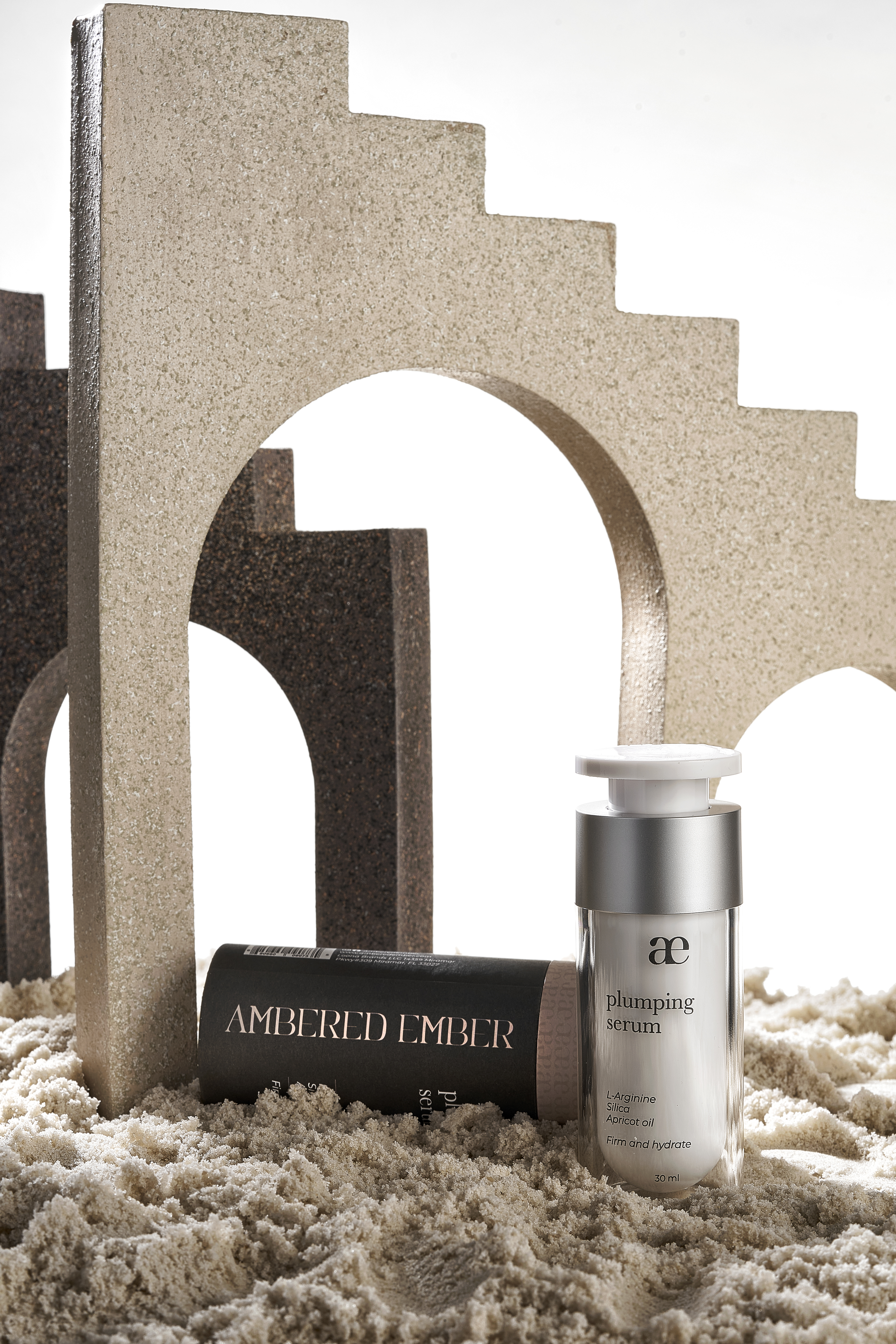
AE Plumping Serum delivers palmitoyl tripeptides straight to your skin's fibroblasts—paired with multi-weight HA, ceramide NG, and niacinamide for the integrated effect oral supplements can't replicate.
Shop plumping serumWhere Each Fits in a Serious Routine
If Your Budget Is Limited
Choose topical peptides. The evidence is stronger, the targeting is precise, and a good serum does multiple jobs (hydration, peptides, barrier, antioxidants). AE Plumping Serum covers more bases than a single-active oral supplement.
If You're Optimizing for Long-Term Skin Health
Both can play a role. Topical peptides daily for direct skin signaling, oral collagen as nutritional support if you're not getting adequate protein from diet otherwise. The oral component is more about overall nutritional sufficiency than dramatic skincare effect.
If You're Already Eating Plenty of Protein
You're probably getting most of what oral collagen would provide from food. Skin collagen synthesis is constrained by signaling and structural support more than by amino acid availability for most well-fed adults.
If You're Vegan or Vegetarian
Vegan "collagen builder" supplements typically contain amino acid precursors, vitamin C, and other cofactors needed for collagen synthesis. They're a reasonable choice—the evidence is similar in magnitude to animal-derived collagen. Combined with vegan topical peptides, the routine works.
Common Misconceptions
"Drinking collagen replaces what your body loses"
False. Swallowed collagen is broken down into amino acids before reaching your skin. Your body doesn't preferentially restore "swallowed collagen" to "skin collagen."
"Marine collagen is better absorbed than bovine"
Some research suggests slightly smaller marine peptides may have marginally better absorption. The clinical difference is small.
"You can drink your wrinkles away"
Marketing hyperbole. Oral collagen produces modest measurable improvements in some studies. It does not erase wrinkles.
"Topical peptides only work on the surface"
Misleading. Properly formulated peptides penetrate the epidermis and signal to fibroblasts in the upper dermis. They're not "deep" in the way injections are, but they're not just surface either.
"Collagen supplements are a waste of money"
Also overstated. The evidence is real if modest. They're not snake oil. They're also not a substitute for topical care or daily SPF.
The Honest Verdict
If you can only do one thing for skin collagen support: choose topical peptides. The mechanism is more direct, the evidence is stronger, and a well-formulated serum delivers multiple benefits beyond peptides alone.
If you have the budget and interest in optimizing further: add oral collagen as a complementary nutritional support, not a replacement for the serum. Or address general protein adequacy in your diet—much of what oral collagen provides comes from any complete protein source.
Either way, daily SPF outperforms both for long-term anti-aging outcomes. The supplement-vs-serum debate is real but less important than the question of whether you're protecting your skin from UV every day.
Common Questions
Will I see results faster from oral collagen or topical peptides?
Both produce subtle changes over 8-12 weeks. Topical may produce slightly faster surface improvements (hydration component); oral effects are typically slower and more diffuse.
Is liquid collagen better than powder or capsules?
No meaningful difference. The form factor doesn't change what happens in your digestive system.
Can I overdo collagen supplementation?
Excess protein from any source is broken down for energy or excreted. Beyond modest doses (10-20g daily), additional collagen doesn't add proportional benefit. Some people experience digestive discomfort at higher doses.
Do collagen supplements cause acne?
Some marine collagen contains residual iodine that can trigger breakouts in iodine-sensitive individuals. Otherwise, no clear connection to acne.
Should I take collagen with vitamin C?
Vitamin C is required for collagen synthesis, so adequate vitamin C status matters whether you supplement or not. Most diets provide enough vitamin C without specific co-supplementation.
Conclusion
Topical peptides and oral collagen supplements work through different mechanisms with different evidence quality. Topical peptides have stronger evidence for skin-specific outcomes; oral collagen has modest broader evidence as nutritional support.
For most people, AE Plumping Serum is the higher-leverage choice—palmitoyl tripeptides, multi-weight HA, ceramide NG, and niacinamide in one daily step. If you also want oral collagen as nutritional support, that's a complementary addition, not a substitute.
The serum reaches your skin directly. The supplement takes a longer route with smaller effect. Pick the more direct intervention first, and add the second only if you have specific reasons to.
Start with the direct approach via AE Plumping Serum—and skip the digestive detour.