Hyaluronic acid is the most-recommended skincare ingredient on the planet—and one of the most variable in actual quality. Two HA serums sitting next to each other on a shelf can deliver dramatically different results depending on molecular weight, formulation pH, and what else is in the bottle.
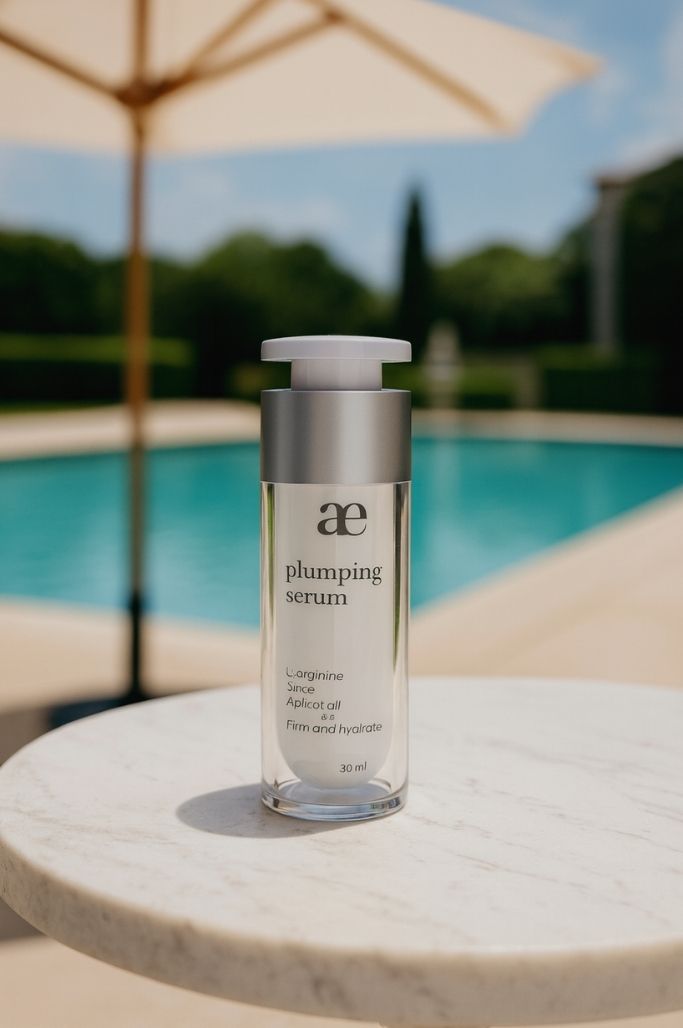
This guide explains what separates great HA serums from average ones, what to look for on a label, and why integrated formulas like AE Plumping Serum often outperform stand-alone HA products for visible plumping. Whether you ultimately choose AE or another brand, you'll know how to evaluate the category.
What Hyaluronic Acid Actually Does
Hyaluronic acid (HA) is a glycosaminoglycan—a long sugar molecule—that occurs naturally throughout your body, including in your skin. Its primary trick is binding water: a single HA molecule can hold many times its weight in water within the upper epidermis.
When you apply hyaluronic acid topically on damp skin, it draws water into the stratum corneum. The result is immediate: skin looks plumper, lines look softer, and the surface reflects light more evenly. This is the basis of the "glass skin" trend that has dominated beauty for years.
What HA doesn't do: build collagen, address structural laxity, or protect against oxidative damage. It's a hydration tool, not a structural one. For long-term firmness work, you need peptides alongside it.
The Multi-Weight Revelation
This is the single most important concept in evaluating an HA serum.
Hyaluronic acid molecules come in different sizes. The size determines what the molecule can do:
A serum using only high-weight HA feels great for an hour and then evaporates. A serum using only ultra-low-weight HA penetrates well but lacks surface plumping. The best HA serums use multiple molecular weights together—surface, middle, and deep—for a layered hydration effect that lasts.
If a serum's INCI just lists "sodium hyaluronate," you don't know which weight you're getting (often it's high-weight only, the cheapest grade). Better products list multiple HA forms: sodium hyaluronate, hyaluronic acid, sodium hyaluronate crosspolymer, hydrolyzed sodium hyaluronate.
What to Look For on a Label
Green Flags
Red Flags
Why Standalone HA Often Disappoints
Many people try a pure HA serum, see modest immediate plumping, and conclude HA "doesn't really do anything." This is a formulation problem, not an HA problem.
Standalone HA serums fail in three common ways:
1. Single high-weight HA only — feels nice for an hour, evaporates fast. 2. No barrier support — hydration evaporates without ceramides or occlusives to hold it. 3. Applied to dry skin — HA pulls moisture from deeper skin instead of binding water from the surface, leaving you feeling drier.
The fix isn't always a different HA serum. Sometimes it's a better surrounding routine—damp skin application, immediate moisturizer, daily SPF—or moving to an integrated formula that solves all three problems at once.
Multi-weight HA, with the support that makes it last
AE Plumping Serum combines multi-weight hyaluronic acid with palmitoyl tripeptides, ceramide NG, and niacinamide—hydration that doesn't evaporate by lunch.
Shop plumping serumComparison: HA Serum Categories
| Type | Typical price | Pro | Con |
|---|---|---|---|
| :--- | :--- | :--- | :--- |
| Drugstore single-MW HA | $10-20 | Cheap, accessible | Single-weight, basic vehicle |
| Mid-range multi-MW HA | $25-50 | Better hydration depth | Often missing barrier support |
| Premium multi-MW HA | $60-150 | Excellent depth + texture | High markup, often single-active |
| Integrated plumping serum (AE) | $48 | Multi-MW HA + peptides + barrier | Less customizable |
How to Apply HA Correctly
The single biggest upgrade most people can make to their HA results: apply on slightly damp skin, not dry.
After cleansing, pat skin almost dry but leave it a little damp. Apply your HA serum (or AE Plumping Serum) and press in. Wait 60 seconds, then layer your moisturizer immediately to seal the hydration. In dry climates, consider a humidifier in your bedroom—it dramatically improves how HA performs overnight.
For dehydrated skin specifically, applying HA twice daily plus a ceramide-rich moisturizer typically reverses the surface tightness within 7-14 days.
Common Questions
How much HA percentage do I need?
Concentration matters less than molecular weight diversity. A 1% multi-weight HA in a good vehicle outperforms a 3% single-high-weight HA in a basic vehicle.
Can hyaluronic acid dehydrate skin?
Sort of. In very dry environments (under 30% humidity), pure HA without an occlusive seal can pull water from deeper skin. Always follow with a moisturizer, especially in winter or desert climates.
What's the difference between hyaluronic acid and sodium hyaluronate?
Sodium hyaluronate is the salt form of hyaluronic acid—smaller molecule, often better penetration. Most modern serums use sodium hyaluronate even when labeled as "hyaluronic acid."
Should I use HA in the morning or evening?
Both. AM hydration creates a smooth canvas for makeup; PM hydration combats overnight transepidermal water loss. AE Plumping Serum is built for twice-daily use.
Is polyglutamic acid better than hyaluronic acid?
Different mechanism, often complementary rather than replacement. Read polyglutamic acid vs hyaluronic acid for the full breakdown.
The Verdict
The best hyaluronic acid serum in 2026 isn't necessarily the most expensive or the most "pure." It's the one that delivers multi-weight HA in a vehicle that supports your barrier and pairs well with the rest of your routine.
For most people, an integrated formula like AE Plumping Serum—multi-weight HA plus peptides plus ceramide NG plus niacinamide—is more practical than stacking three or four single-active products. You get the same hydration depth with less complexity and lower total cost.
If you want a stand-alone HA serum, look for multiple HA forms in the INCI, fragrance-free formulation, and a vehicle that includes glycerin or other humectants. Then commit to twice-daily use on damp skin for at least four weeks before judging results.
Try AE Plumping Serum for the integrated approach—or use this framework to evaluate any HA serum on the market.