Snow mushroom—Tremella fuciformis, also called silver ear or white jelly fungus—has been used in traditional Chinese medicine for centuries. In the 2020s, it became one of the trendiest skincare ingredients, often marketed as "nature's hyaluronic acid" or "better than HA." The mushroom is real, the polysaccharides it produces are real, and the surface hydration effect is real.
But the marketing oversells the case against hyaluronic acid—just like it does for polyglutamic acid and other "alternative hydrators." The honest version: snow mushroom is a useful and well-tolerated humectant, but it doesn't replace HA in a serious routine. This guide explains the mechanism, the evidence, and how each ingredient genuinely fits in modern skincare.
What Snow Mushroom Actually Is
Tremella fuciformis is a white, translucent mushroom that grows on tropical hardwood trees. The active component used in skincare is the cell wall polysaccharide—a long sugar chain similar in structural concept to hyaluronic acid but biochemically distinct.
The polysaccharide is extracted through controlled fermentation and processed into a fine powder or liquid that can be incorporated into serums and moisturizers. The marketing-friendly headline: this polysaccharide can hold significant water relative to its weight—similar to HA's water-binding claim.
What Hyaluronic Acid Actually Is
A glycosaminoglycan that occurs naturally in your body, including in your skin. The most-studied humectant in skincare with decades of research. Modern formulations use multiple molecular weights together for layered hydration depth—high-MW for surface, medium-MW for upper epidermis, low-MW for deeper penetration.
A serious HA serum is multi-weight. A poorly formulated one uses single high-weight HA only.
The "Nature's HA" Claim
Snow mushroom is often marketed as "nature's hyaluronic acid" with the implication that it's a more natural or better-tolerated alternative. The claim has both truth and inflation:
The truth: The polysaccharide structure is similar in concept to HA. Both are long sugar chains that bind water. Both can produce surface hydration improvements.
The inflation: Snow mushroom doesn't outperform multi-weight HA in side-by-side studies. The "better than HA" framing is marketing, not biology. And the "natural" framing is misleading—modern HA is also produced through bacterial fermentation, not synthesized from petroleum or animal sources.
How Each Works on Skin
Snow Mushroom (Tremella Polysaccharide)
Hyaluronic Acid (Multi-Weight)
The differences are subtle. Both work. Multi-weight HA is more thoroughly studied and offers more depth of hydration delivery.
The Honest Comparison
| Property | Snow Mushroom | Hyaluronic Acid |
|---|---|---|
| :--- | :--- | :--- |
| Source | Mushroom polysaccharide | Bacterial fermentation |
| Molecular weight | High (single) typically | Available in multiple weights |
| Penetration depth | Surface | Multi-depth (with multi-MW) |
| Water binding (in vitro) | High | High |
| Water binding (in skin) | Real, surface-focused | Real, multi-depth |
| Antioxidant activity | Modest, from secondary compounds | None directly |
| Years of research | Limited (mostly recent) | Decades |
| Tolerability | Excellent | Excellent |
| Marketing claims | Often inflated | More established, less inflated |
| Best for | Surface smoothing, sensitive skin | Foundation hydration |
Where Snow Mushroom Genuinely Shines
Snow mushroom is a useful ingredient, particularly for:
Where Hyaluronic Acid Wins
HA remains the foundation of modern hydration routines because:
For dehydrated skin specifically, multi-weight HA produces faster, deeper visible improvement than snow mushroom alone.
Multi-weight HA in an integrated formula
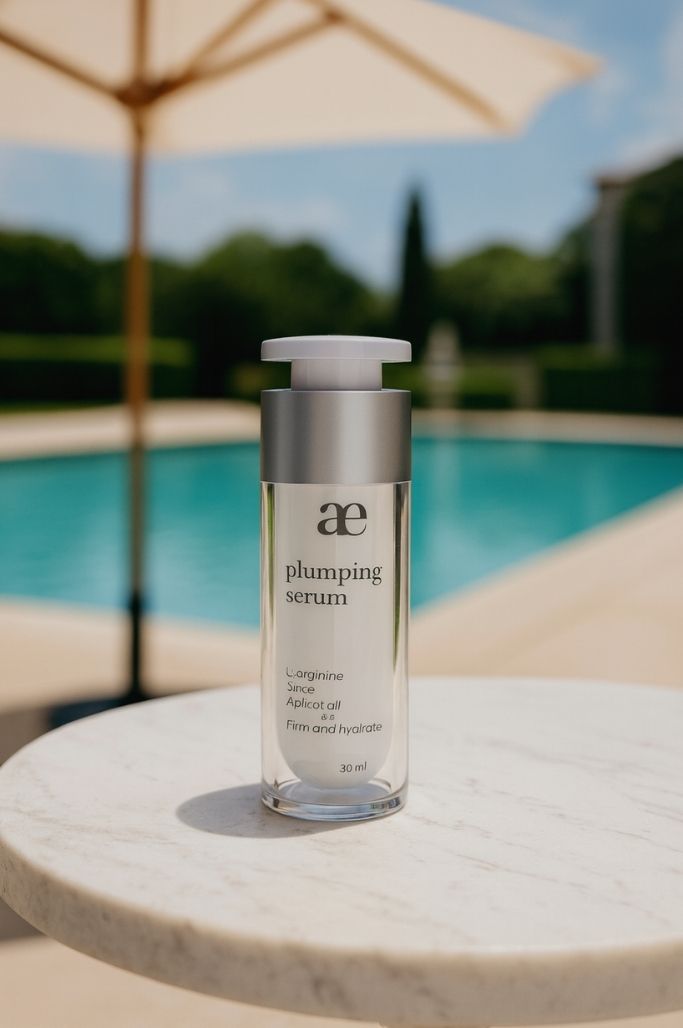
AE Plumping Serum delivers multi-weight hyaluronic acid alongside palmitoyl tripeptides, ceramide NG, niacinamide, and botanical antioxidants—the foundation that "alternative hydrators" complement rather than replace.
Shop plumping serumShould You Use Both?
If you have the routine tolerance and budget: yes, they layer cleanly and complement each other.
The order: 1. Cleanse, leave skin slightly damp 2. Apply AE Plumping Serum for multi-weight HA + the rest of the integrated stack 3. Wait 60 seconds 4. Apply snow mushroom serum (if using) on top for surface retention 5. Moisturizer to seal everything
For most people, the integrated serum + moisturizer is sufficient. Snow mushroom is a nice optimization, not a necessity.
What About Marketing Claims About Snow Mushroom?
You'll see snow mushroom marketed with various claims:
"Hydrates 500x its weight in water"
In vitro measurement. The in-skin difference vs. multi-weight HA is much smaller.
"Smaller molecule than HA"
Misleading. The molecular weight depends on processing. Some snow mushroom polysaccharides are actually larger than low-MW HA. The "smaller = better penetration" assumption isn't reliable here.
"Better for sensitive skin than HA"
Both are well-tolerated. Standard HA is also excellent for sensitive skin. The distinction is overstated.
"Anti-aging benefits beyond hydration"
Snow mushroom has some modest secondary antioxidant activity from associated compounds, but it's not a dedicated anti-aging active. Pair it with peptides for that work, not as a replacement.
Common Questions
Should I switch from HA to snow mushroom?
No. Snow mushroom is a complement, not a replacement. Multi-weight HA's depth and evidence base make it the more reliable foundation.
Is snow mushroom safer or more "natural" than HA?
Both are safe and well-tolerated. Both come from fermentation processes. The "natural" framing is largely marketing.
Can I layer snow mushroom serum with AE Plumping Serum?
Yes. Apply AE first on damp skin, wait, then layer snow mushroom serum on top. Both work.
Does snow mushroom cause breakouts?
Generally no. The high-MW polysaccharide stays on the surface and is well-tolerated by most skin types.
Is the price difference worth it?
For most people, no. A quality multi-weight HA serum at the same price tier produces equal or better visible hydration. Snow mushroom premium is largely about novelty.
The Verdict
Snow mushroom is a real, useful ingredient that's been substantially overhyped by marketing as a "better hyaluronic acid." The honest picture: it's a well-tolerated surface humectant that complements multi-weight HA but doesn't replace it. The foundation of serious hydration remains HA (and peptides, ceramides, niacinamide for the integrated effect).
For most people, AE Plumping Serum is the more impactful starting point—multi-weight HA, peptides, ceramide NG, niacinamide, and botanical antioxidants in one daily step. Add snow mushroom on top if you have specific surface-smoothing goals or simply enjoy the texture, but don't expect it to outperform what's already in a well-formulated integrated serum.
Start with the multi-weight HA foundation in AE Plumping Serum.